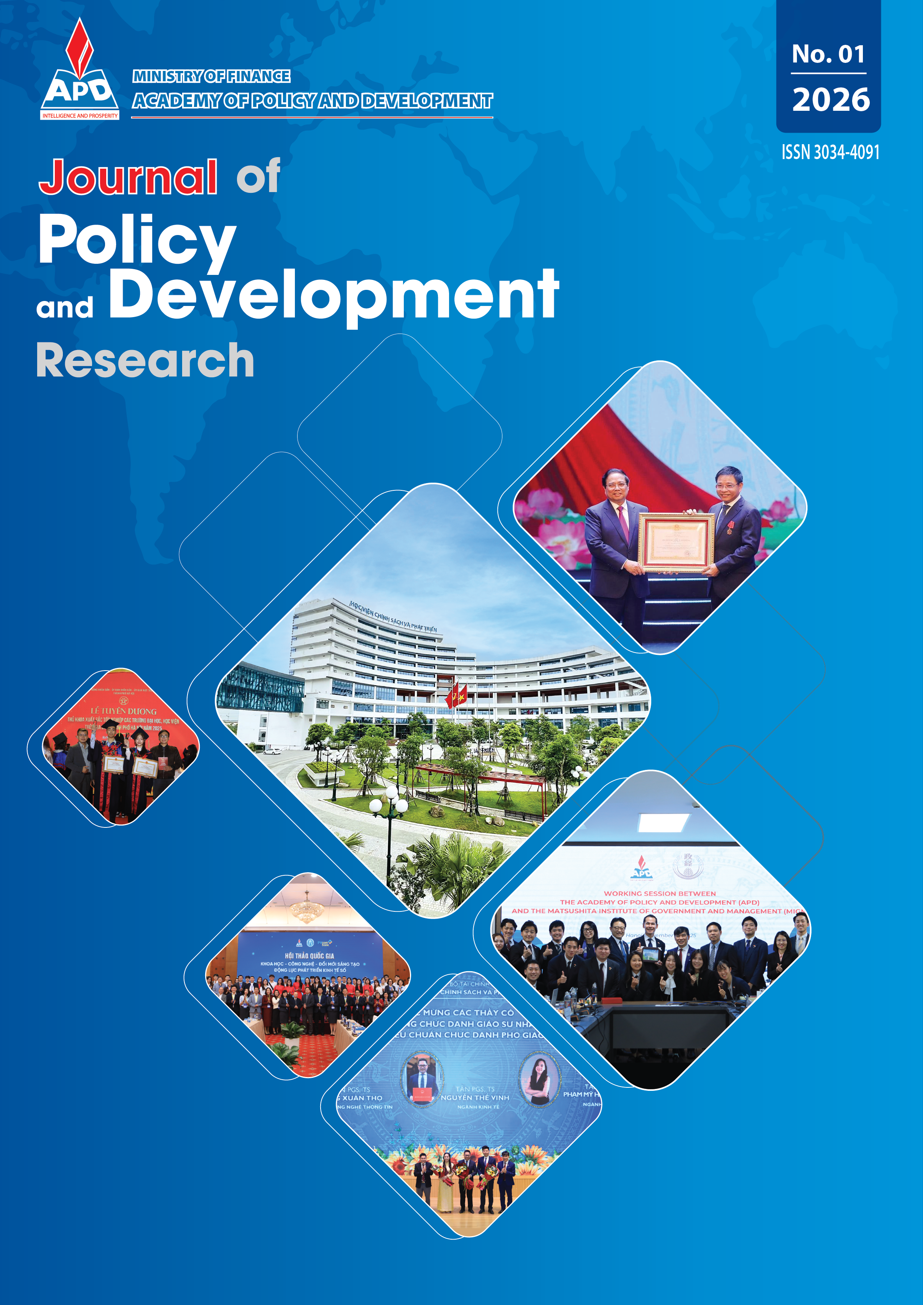
Integrating AI and Digital Tools in Translation and Interpreting Education: Evidence from the Academy of Policy and Development
Đã Xuất bản
Cách trích dẫn
Số
Chuyên mục
DOI:
https://doi.org/10.63640/3030-4091/jpd.apd.85Từ khóa:
AI-assisted translation; Digital tools; Higher education; Translation pedagogyTóm tắt
In the digital era, artificial intelligence (AI) and digital tools have reshaped translation and interpretation education, particularly in disciplines related to Business and Economics, where accuracy, speed, and contextual awareness are essential. This study examines the impact of AI and digital tools on learning outcomes and teaching methodologies in translation and interpreting courses at the Academy of Policy and Development (APD). Using a mixed-methods approach, data were collected from 150 undergraduate students majoring in Business and Economics–related programs and 20 faculty members through surveys and semi-structured interviews. Quantitative findings indicate a strong correlation (r = 0.68, p < 0.001) between AI tool usage and improvements in translation accuracy (M = 3.75, SD = 0.82), particularly in business-oriented texts. Qualitative analysis highlights key benefits such as increased accessibility to professional resources, improved efficiency in terminology management, and enhanced learner autonomy, alongside challenges.
Tài liệu tham khảo
Adhanawati, A., et al. (2024). The use of artificial intelligence (AI) translation tools: Implications for third language proficiency. International Journal of Research and Innovation in Social Science, 8(9). https://doi.org/10.47772/IJRISS.2024.8090161
Alexander, K., et al. (2022). Digital translation tools are used in the process of teaching foreign languages. SHS Web of Conferences, 141, Article 03007. https://doi.org/10.1051/shsconf/202214103007
Atsani, W., & Gilang, F. (2019). Technology and its requirement for teaching translation and interpreting in a disruptive era. In Proceedings of the International Conference on Language, Literature, and Translation (ICLLT 2019). https://doi.org/10.4108/eai.12-10-2019.2292209
Cornelia, P. (2024). Teaching technical translation in the digital era: Challenges and expectations. Romanian Journal of English Studies. https://doi.org/10.2478/rjes-2024-0012
Kaoutar, A. (2024). The role of artificial intelligence translation tools in academic translation: Faculties of pure sciences as a case study. International Journal of Translation and Interpretation Studies, 4(3), 7–17. https://doi.org/10.32996/ijtis.2024.4.3.2
Kruk, M. (2024). Investigating the role of AI tools in enhancing translation skills, emotional experiences, and motivation in L2 learning. European Journal of Education: Research, Development and Policy. https://doi.org/10.1111/ejed.12859
Sasikala, P. (2024). Study on the impact of artificial intelligence on student learning outcomes. Journal of Digital Learning and Education, 4(2), 145–155. https://doi.org/10.52562/jdle.v4i2.1234
Tian, X. (2024). Personalized translator training in the era of digital intelligence: Opportunities, challenges, and prospects. Heliyon, 10(20), Article e39354. https://doi.org/10.1016/j.heliyon.2024.e39354
Verónica, A., & María, T. (2023). Online training for the language industries: Translation and interpreting training in the digital era. International Journal of Translation and Interpreting.
Yang, W. (2023). The future of language interpretation and translation in education: Technology use as a mediator. Educational Administration: Theory and Practice, 29(4), 159–174. https://www.kuey.net